16 Ways to Avoid Overweight Kids (and raise healthy eaters)
Posted on
Parents have an incredible influence over the habits, thoughts, beliefs and actions of their children.
Including what they put into their mouths. In Australia, over a quarter of children are overweight or obese, and this number only continues to rise. To avoid your children being a part of that statistic, here are 16 ways you can ensure your kids are healthy, confident eaters:
1. Establish a household food policy
This is the best principle to follow when it comes to feeding your kids:
You (the parent) decide WHAT and WHEN food is served, they (the kids) decide WHAT and HOW MUCH off their plate that they eat. They can eat it all or they can eat nothing, totally up to them. Your job is to provide nutritious food options and good variety. It’s their job to eat according to their appetite and preferences from the food you’ve offered.
2. Don’t make it a big deal
Does your child have funny eating habits like overeating at times or hardly eating at all? The best thing you can do for this is to not draw attention to it. Kids like to feel like they’re in control and the more you try to control how they eat the more likely they are to do the exact opposite of what you want. Follow the rule above: stop talking about food so much, don’t give them a label and just enjoy life!
3. Don’t use food as a bribe
“If you eat all your dinner then you can have dessert”. I know it’s hard sometimes to get them to eat what you want them too, but this is not the answer. I have a 4 year old and a 6 year old myself, so I understand. However, bribing with food teaches kids unhealthy associations with food and makes them prefer unhealthy food even more.
4. Use non-food rewards
When our kids have been well-behaved we like to do something nice for them, like offer them a yummy treat, take them out for ice cream or buy them a hot chocolate. Try other rewards to show you love them like buying them a new book, toy or outside play activity to encourage healthy behaviours rather than using food.
5. Use non-food comfort techniques
How easy is it for us to hand over a biscuit or other yummy food item when our child has fallen over and scraped their knee or bumped their head? We want them to feel better and generally yummy food will stop the tears in an instant. What we are actually doing is teaching our kids emotional eating. Try other comfort techniques like sitting on the couch and having a nice cuddle, reading their favourite story or helping you out in the kitchen.
6. Have strict family food rules
A recent Italian study found that strict family food rules resulted in higher fruit and vegetable consumption in children and teenagers. Kids should not be able to have free range of the contents in your fridge and pantry. We should be the one who determines what and when snack and meal times are. Although hard at first, your kids will thank you one day.
7. Encourage creative play
Sometimes children can ask for food if they are bored or idle. Google “cheap kids activities” and you’ll find heaps of great ideas that you can give your children to do. As parents you are the gatekeeper of the kitchen and can teach your children to occupy themselves with valuable activities instead of eating out of boredom.
8. Have regular family meal times
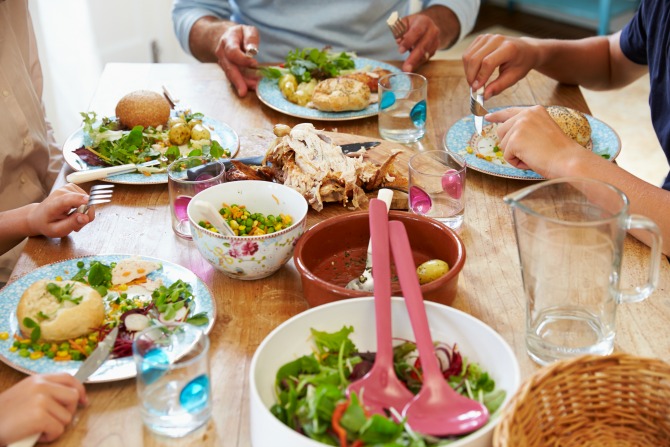
Turn the TV off, set the table and sit around it enjoying a good home cooked meal together. Family dinners and eating together has a significant impact on your child’s eating habits as well as your own. I recently wrote a post on the association between childhood obesity and family meal times, you should check it out.
9. Be organised
So much of our problem with poor eating habits is due to the fact that we are unprepared. Plan out your family’s meals and snacks. Get your kids involved in the planning process. Maybe they can each pick a family meal or weekly snack. Put the meal plan on the fridge for everyone to see. When you get the daily question “what’s for dinner” you can say “check out the meal plan”.
10. You are not a restaurant
You are a parent, not a gourmet chef or a la carte restaurant. Meals like breakfast, lunch and snacks don’t have to be different everyday. In fact, consistency and routine are very strong predictors of healthy eating habits, particularly in children. As long as the meals have plenty of good nutrition, there is no reason why they can’t have the same thing for breakfast or lunch everyday – with maybe something different on the weekend.
11. Learn to say “no” at the supermarket
If you have to take your kids shopping, don’t succumb to the food advertising that makes kids go “Mum, can we buy the chocolate muffin cakes with Buzz Lightyear on them?”. Use this as a good opportunity to teach your kids discipline and restraint. One of the best recommendations I can make to people who want to lose weight is to not buy junk food in the first place. If you don’t buy it you wont eat it. Simple.
12. Make vegetables exciting
Recipes that “hide” vegetables so your kids will eat them are fine, but why not teach your children to enjoy them. Don’t boil the heck out of them or serve them mushy or boring. Not even I eat vegetables like that, no matter how good they are for me. Toss them in fresh herbs, balsamic vinegar, garlic, ginger or lemon juice. BBQ them, roast them and steam them. Make them fresh and exciting.
13. Fruit is the best snack option
If your children complain they are hungry close to dinner time, offer them some fruit. It’s high in fibre, vitamins and minerals, low in energy and it won’t ruin their appetite for dinner. Fruit like apples, bananas, grapes, strawberries, kiwifruit and many others can be eaten on the spot, require little preparation and create no dishes! Bonus!
14. Water, water, water
Children don’t need to drink fruit juice, soft drink or flavoured milk drinks. Unless you have a son or daughter who is a future Olympic athlete and is eating you out of house and home, kids don’t need the extra energy that these beverages contain. Water is fine, just plain water. No cordial or other flavours. Teach your children to appreciate the simplistic pleasure of drinking a cold fresh glass of H2O. Buy them special drink bottles and get them to drink it through the day, serve water at dinner and snack times and make all other beverages very occasional treats, no more than once a week.
15. Limit screen time
The Australian Physical Activity Guidelines for Children recommend no more than 60 mins of screen time (computer, TV, DS and tablet devices are all included) per day. Most of their day is already spent sitting down at school so instead encourage them to get outside and play, ride their bikes, run around, make cubby houses, play in a sandpit and move their bodies. Find kids’ Zumba on Youtube and get them to join in! So fun!
16. Prioritise physical activity
My children love riding their bikes out in the street after school. They love it! Sometimes it means that homework doesn’t get done but they’re little and I know how important it is for their development that they move their bodies regularly. I like the fact that I’m teaching them to prioritise physical activity. Go to the park regularly, go on bush walks, ride bikes around a lake, kick a ball around an oval, play “silly” Olympics with another few families, the sky’s the limit!
These are my 16 ways to help you raise healthy kids, but I’d love to hear from you too. What things do you do as a parent to raise healthy children and teach them good eating habits?
Image of cute girl eating an apple in the park courtesy of Shutterstock.


Leave a Reply