She’s in the water: taking a splash to manage burnout
Posted on
Have you considered taking a splash in the local pools to help prevent or manage habitual burnout?
Burnout is a serious matter. One in three Aussies are suffering from burnout. Four in five faced burnout in 2020. What strategies have you put in place to manage (or prevent) burnout?
At HerCanberra we find the above statistics quite frightening, so we are doing our part to educate our community about the importance of self-care, mindfulness, wellness tips and burnout prevention strategies. There are options for those who want to make a start on a gradual return to exercise plan—like taking a splash.
There are resources that can assess your burnout and test your stress levels. Understanding where the stress is coming from, and implementing tools is a positive step forward. It is often multifactorial, therefore takes time to figure out where the “overstretch” is originating.
This article isn’t about diagnosing or treating chronic habitual burnout—see your GP or an allied health professional if you are concerned. Education and empowerment is our goal. In today’s She’s in the water article we will dive into Vagus Nerve Wall Hydrolates (Aquatic Wall Pilates), mindfulness exercises in the water and gentle Deep Water Running flow sessions.
Before we dive into part four, did you get a moment to read part one, two and three of She’s in the water?
In part one, we discussed “the why” behind immersing in water; hydrostatic pressure, blood flow, buoyancy, viscosity, vasodilating, the brain and releasing of neurochemicals, local pools in Canberra and their opening hours, and simply “how to get started”.
In part two and three we introduced the Hydrolates (Aquatic Pilates) and Deep Water Running concepts, self-management equipment options & discussed skin and hair care pre/post water immersion.
Welcome to part four of She’s in the water.
Overstretch
Personally, I like the word “overstretch”, rather than stressed. Here are five tips on how to recover from burnout/overstretch:
- Track and identify where you are overstretched (amount of work hours, the home juggle, social commitments, overdoing it at the gym, evening routine, weekend madness, mornings habits, not taking a lunch break, etc).
- Seek professional help.
- Create a support network.
- Get enough exercise.
- Embrace “overstretch” management techniques.
Here are three overstretch management techniques to implement in your week.
Mindfulness in the water
We have an expert to coach us through the mindfulness segment of She’s in the Water. Have you practiced mindfulness in the water before?
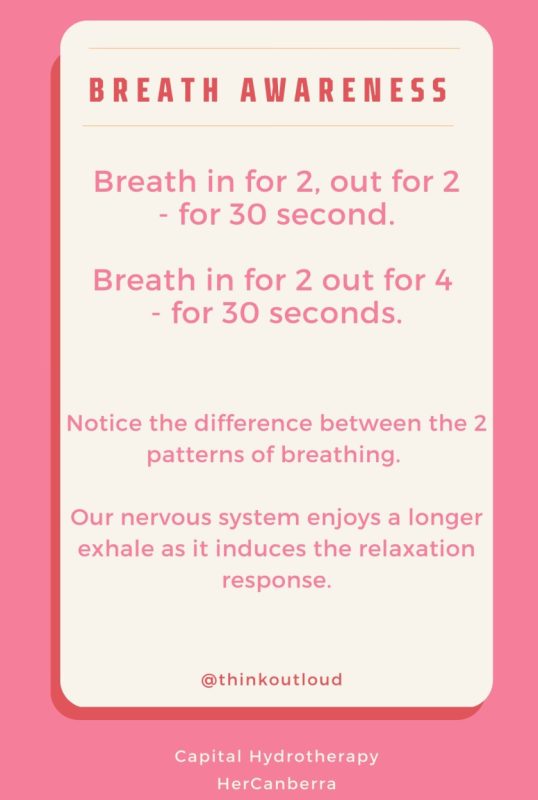
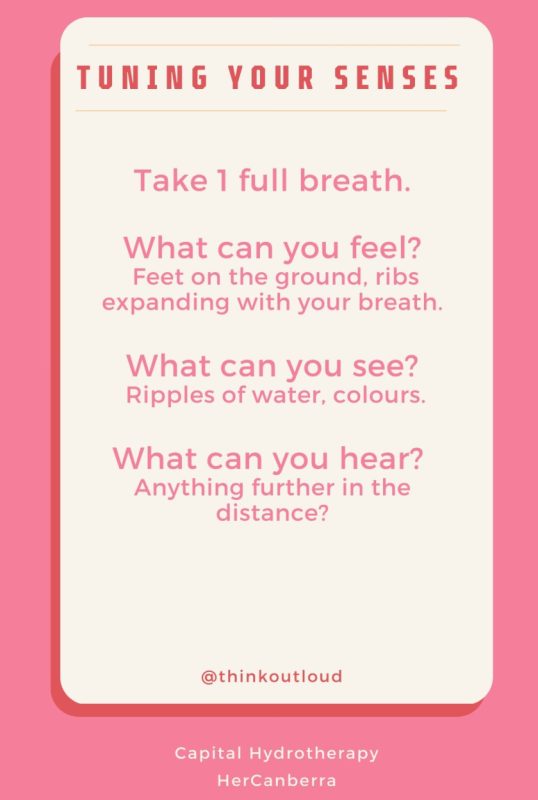
Dee from Thinkoutload states “focusing on our breath and body in the water is such a calming way to feel ease again in our whole being. Here are two mini mindfulness practices you can try next time you immerse in water—breath awareness and tuning your senses”.
The Vagus Nerve and Wall Hydrolates Session
Controlled breathing and gentle movement lead to a restful state and mental tranquillity—which can improve pain threshold. Have you heard of the Vagus Nerve (VN)? It is fascinating; and a fundamental regulator of the parasympathetic nervous system, which controls all the involuntary processes such as digestion, heartbeat and breathing.
It is the longest nerve in the body, and originates in the brain and travels all the way down to the lower internal organs.
Most importantly, the VN is responsible for restoring relaxation after a response to stress or danger (the sympathetic nervous system’s activation). Which is where the Hydrolates comes into play (mindful breath to movement)—here we can focus on “Vagal Tone” (the strength of the Vagus response is called “vagal tone”). A high vagal tone is what we need in order to maintain a state of good health a well-being.
How did you go with last week’s mini-Hydrolates session? At Capital Hydrotherapy we host over 200 Hydrotherapy sessions a week—some are Autoimmune classes, where we focus on toning the Vagus nerve and do Wall Pilates, others are sensory sessions—where we create a quiet environment and focus on mindfulness, like what can you hear? What can you feel? What can you see? Ripples of water, equipment, colours etc.
Here’s a mini-Hydrolates program, to help manage burnout (click here)—it’s based on the wall, so you are supported and stable:
- Alternating single leg knee lift—two sets x 10 repetitions
- Long lever rainbow—two sets x 10 repetitions
- Heel slide to stork—two sets x 10 repetitions
- Straight leg circles—two sets x 10 repetitions
Again, variety is key. I’d recommend mixing up the Wall Hydrolates session with some gentle shallow water walking, mindfulness on the wall and Deep Water Running (in a flow state—nothing stress inducing).
Deep Water Running—Flow State
Aerobic exercise is now regarded as a standard treatment for many chronic conditions because of it’s benefits to general wellbeing. It is only one part of the multifactorial burnout recovery puzzle. The style, type, duration and intensity should be assessed by an allied health professional—in order to help track, support and individualise the program.
You can adapt the DWR movement pattern to suit your needs; as it’s a non-weight bearing form of exercise, therefore you can manage your load.
Try these two gentle Deep Water Running sessions:
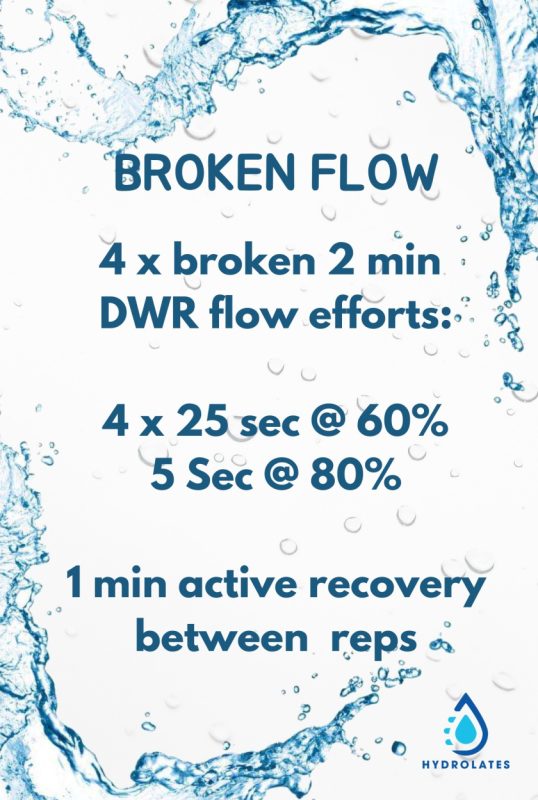
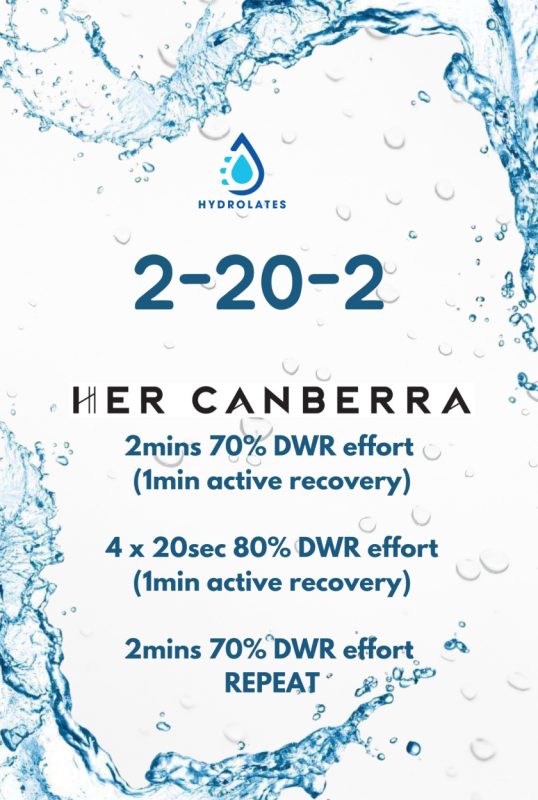
Start with one session, track how you recover, then add another session—like building a sturdy stable house (“one brick at a time”).
How much exercise is right for you if you are suffering from burnout? Progressive overload is best:
- Start with two or three days per week, exercising at 10 minute intervals throughout the day (light intensity).
- Aim for gradual progression to 30 minutes of exercise per day over five to seven days per week (moderate intensity).
In part five we will focus on a shoulder program for the casual swimmer, a mini-Hydrolates session to add to your collection, hydration during a water session (without needing a toilet break—hello pelvic floor!), and snacks before and after a pool session.
Burnout does matter—and there are options for those who want to make a start on a gradual return to exercise. Did we inspire you to find those old swimmers and take a splash?
Love, Kirra
Capital Hydrotherapy and Exercise Physiology is open for one-on-one Hydrotherapy, Aquatic Physiotherapy (and land-based Physio), land-based Exercise Physiology, small group therapy, Hydrolates™ classes (Aquatic Pilates) with strict COVID-safe precautions.
If you are injured, have a chronic health condition, or need a plan to improve your health and wellbeing—call us today 6156 2223!
Disclaimer: The information provided by Kirra Rankin is for educational purposes only and does not substitute for professional medical advice. Her Canberra advises our community to consult a medical professional or healthcare provider if they’re seeking more specific medical advice, diagnoses, or treatment.