A few things you need to know about Riesling

Posted on
 If we’re anything alike, a trip to a great new restaurant will lead to a bit of a frenzy in the kitchen while I try to replicate some of the great dishes tasted. Of course, that means looking for a great wine to enjoy (while cooking and while eating!).
Our recent visit to Akiba inspired a week of Asian-themed cooking at our house and many conversations about what kind of wine to match with fresh, spicy food. Although there are plenty of options, I think it’s hard to go past a good ‘off dry’ Riesling. Luckily, the Canberra District has a few great ones to choose from.
Riesling has a troubled history in Australia, with many people remembering the dark days of “Blue Nun” and similar, overly sweet wines that sold in vast quantities and destroyed the Riesling name. Winemakers reacted by aiming for complete dryness in quality wines, often to the detriment of the wines themselves. Riesling has such wonderful natural acidity (especially in cool climate regions like Canberra), that a little sweetness is necessary to transform it into something more appealing. In the last 10 years, off-dry or half-dry Riesling styles have made a come-back, reminiscent of the Germanic examples they were inspired by originally.
These off-dry styles lend themselves to matching with Asian cuisine perfectly; the sugar calms down the chilli heat, leaving you able to taste more of both the food and the wine; a very moorish combination on a hot summer’s night.
So what distinguishes a Riesling?
Riesling is a highly aromatic variety and is all about pure fresh fruit with no oak, high alcohol content or heavy tannins. It’s like biting into a perfectly ripe piece of fruit like a crisp, juicy apple. Intense fruit aromas should leap out of the glass and complex flavours explode on your palate, followed by a palate-cleansing juiciness.
Riesling is the perfect combination of ripe fruit and brisk acidity. If you taste a Riesling that is flabby and sort of blah, it probably doesn’t have good acidity, which can be the result of picking it too late.
Where did Riesling originate?
Riesling is originally from Germany and was planted there as early as the 15th century. Germany is still the largest producer of Riesling, with approximately 54,000 acres dedicated to the variety. Australia is one of the largest producers in the world and the Canberra district has cultivated a very strong reputation for producing cold climate Rieslings.
A range of ‘finishes’
Riesling comes in more ‘finishes’ than any other wine. Some are bone dry, with no discernible sweetness. Others are off dry with a hint of sweet and some are late harvest or, quite simply, sweet. All of these terms—dry, off dry, late harvest—refer to a level of sweetness or residual sugar in a wine. A wine is considered dry when all of the grape sugar is converted to alcohol during fermentation, while a sweet wine still has some residual sugar. Semi-dry or off dry wines have a mild or softly perceptible sweetness.
Drops to drink
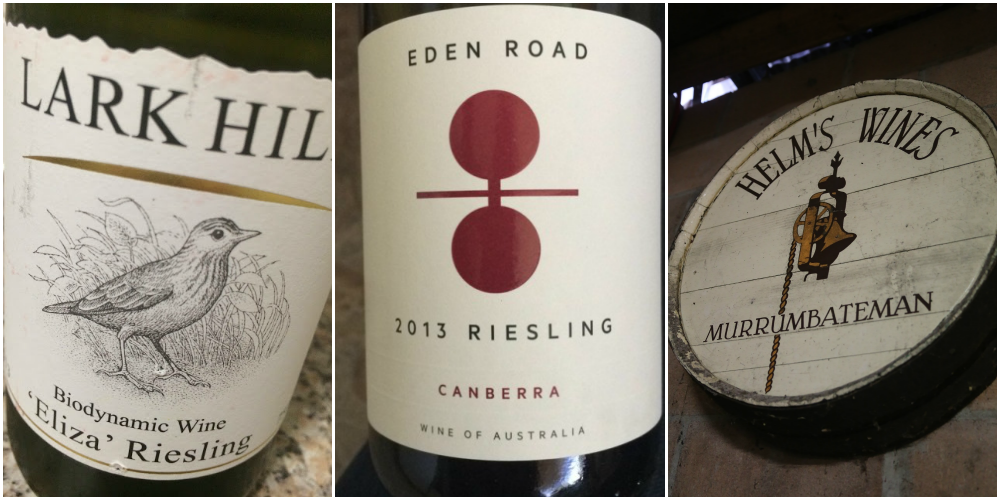
Lark Hill Winery’s 2013 Eliza Riesling
I am very biased towards this particular wine because it is named after my eldest daughter. That said, it is a wonderful wine with vibrant lime and mineral notes, finishing with a gorgeous touch of sweetness balanced by zesty acidity. Read more about it here.
Eden Road’s 2013 Riesling
The fruit for this Riesling is sourced from a vineyard just north of Murrumbateman. The vineyard lies at an altitude of 600 meters above sea level on an ancient de-composed granite belt that runs either side of the Barton Highway. The Off Dry style of this wine is a homage to one of winemaker Nick Spencer’s favourite wines from J.J. Pruhm in Germany. Discover it here.
Helm Wine’s 2014 Half Dry Riesling
This wine has sweet fruit flavours that are well balanced by crisp, citrus acid. Find out more here.
What’s your favourite Riesling?
Feature image of glass of white wine courtesy of Shutterstock.


Leave a Reply
You must be logged in to post a comment.