How I Got Here: Mandy Ho, Senior Technical Consultant at Fujitsu
Posted on
Admit it, we’ve all been there – stalking social media and LinkedIn profiles, trying desperately to figure out how the hell someone got their dream job.
It seems impossible and yet there they are, living out your career fantasy (minus the itchy business suit). It might seem hard to believe, but once upon a time, they were also fantasising about their future career, and with some hard work, they made it.
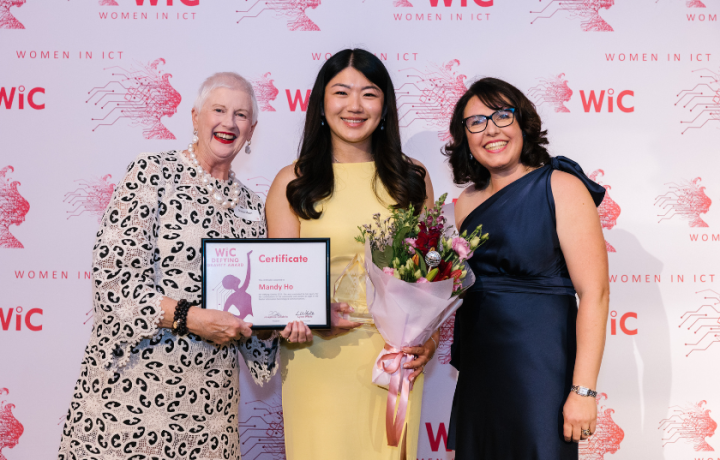
Welcome to How I Got Here, HerCanberra’s series that reveals everything you want to know about the secrets of career success. This week, Mandy Ho, a Senior Technical Consultant at Fujitsu, shares her career journey. The recent winner of the Women in ICT (WIC) Defying Gravity Award for her outstanding efforts in driving change towards gender equity in ICT, she breaks down what a Senior Technical Consultant actually does and how she got here.
Existential crisis time: Who are you and what do you do?
My name is Mandy, and I’m a Senior Consultant within the Technical Consulting team at Fujitsu Cyber. In my day-to-day role, I help clients solve complex technical challenges, design secure solutions, and navigate the ever-evolving cyber landscape. It’s a job that demands precision, creativity, and resilience, and yes, when I’m not on client site, you’ll often find me in a hoodie, deep in problem-solving mode.
But my identity extends far beyond my professional title. Outside of work, I divide my time between two passions: fitness and advocacy for gender equity in STEM. Staying active is my way of maintaining balance and mental clarity, whether it’s through strength training, running, or training for a triathlon. It’s not just about physical health; it’s about discipline, focus, and pushing boundaries, qualities that mirror my approach to consulting.
Gender equity, however, is where my heart truly lies. Having experienced first-hand what it means to work in a male-dominated industry, I understand the challenges women face in STEM. I also know the transformative power of support networks and mentorship. The women and men who championed me throughout my career have shaped who I am today, and now I strive to pay it forward. Through volunteering with organisations like Women in ICT (WIC) that promote gender equity, I aim to create pathways for others, amplify voices, and help build an inclusive future in technology.
I’m also a proud mum to three fur babies: a dog and two cats who remind me of the importance of slowing down and appreciating the little things, even when life moves fast.
Let’s go back to when you were a kid, have you always dreamed of working in this industry?
I never imagined myself pursuing a career in IT, let alone cybersecurity. I’ve always been fascinated by true crime and understanding what drives criminal behaviour. My undergraduate degree was in Criminology with the goal of working in a CSI-type role. When reality set in, I realised that path wasn’t what I truly wanted.
Thanks to a friend in recruitment, I was introduced to the world of cybersecurity. That sparked a pivot I went on to complete my Master’s degree in the field, and the rest is history.
Tell us about when you were first starting out, what set a fire in your belly to get here and how did you do it?
When I first started out, it wasn’t easy. At university, I was often the only woman in the room, and early in my career, there was very little female leadership or ethnic diversity in the industry. That reality fuelled my determination to become the representation I wished I had for the younger generation coming after me.
To build my network and find support, I joined groups like the Australian Women in Security Network, WIC, and ISACA, which offered incredible mentoring and networking opportunities. Through these communities, I met mentors and allies who guided me along the way. I also attended networking events that opened doors to opportunities and connected me with senior professionals who have shaped my career.
Another key factor was continuous professional development. Cybersecurity is ever evolving, so I invested heavily in upskilling. This commitment not only strengthened my credibility but also gave me the confidence to speak up and gain credibility in any room.
Recall a time when you wanted to chuck it all in; what did you tell yourself when it got too hard?
There were definitely moments when I felt like giving up. Early in my career, the lack of representation and the constant feeling of being the “only one” in the room were overwhelming. At times, imposter syndrome crept in, and I questioned whether I belonged in this industry.
What kept me going was reminding myself why I started: to break barriers and create space for others who look like me. I told myself that every challenge was an opportunity to grow and that my presence mattered not just for me, but for the younger generation watching. I also leaned on my support network and mentors, who reminded me that progress takes time and resilience.
What was your biggest break?
My biggest break came when I secured my first role in cybersecurity after completing my Master’s degree. Breaking into the industry without prior IT experience was challenging, but I was fortunate to join ACT Health on the Digital Health Record project. That opportunity was a turning point that allowed me to expand on my technical skills, gain hands-on experience, and work alongside incredible professionals who shaped my understanding of the field.
I remain deeply grateful to the leaders who placed their trust in me early on. They recognised my drive and willingness to learn, even though my background wasn’t the norm. That trust gave me the confidence to push forward, embrace challenges, and build the foundation for the career I have today.
It’s a principle I carry with me now when hiring. I actively seek to create opportunities for diverse candidates, because I know how transformative that first chance can be.
What’s the best piece of advice you’ve ever received?
The best piece of advice I ever received came from my first mentor when I was hesitant to apply for a role. They told me:
“Women often feel they need to tick every box before applying, while men will tick a few and go for it. The world already places enough limits on you, don’t add to them yourself. The worst that can happen is they say no, but if you don’t apply, you’ll never know.”
That advice has stayed with me. Whenever imposter syndrome creeps in, I remind myself: the worst-case scenario is rejection, but if I don’t fight for myself, I’ll never know what could have been. It’s a principle I hold close to my heart and share with others – because opportunities start with courage.
What is it about your industry that you love and what makes you want to pull your hair out?
Cybersecurity is dynamic and constantly evolving, which means there’s always something new to learn. I love the sense of purpose that comes with the work– knowing that what we do helps protect people, organisations, and even critical infrastructure is incredibly rewarding. Another aspect I value is the community. It’s collaborative and supportive, with countless opportunities to share knowledge and mentor others, which makes the industry feel like a collective effort rather than a solo journey.
On the flip side, the pace of change can sometimes feel overwhelming. New threats, emerging technologies, and the need for continuous upskilling are part of the job, but they can be exhausting. There’s also still a noticeable lack of diversity and representation in leadership roles, which makes breaking barriers harder than it should be.
Tell us how you ‘stay in the know’, what media do you consume?
Staying in the know is essential in cybersecurity because the landscape changes so quickly. I make it a priority to consume content that keeps me informed and ahead of emerging trends. LinkedIn is one of my go-to platforms I follow leaders, industry experts, and organisations that share insights on the latest threats, technologies, and best practices. It’s also a great space for engaging in discussions and learning from diverse perspectives.
Where do you see yourself in five years?
I have big plans for the future. In the next five years, I aspire to step into a Director level role within my organisation, where I can continue driving meaningful change, not just in cybersecurity, but in creating a more inclusive and equitable workplace. Gender equity is something I’m deeply passionate about, and I want to use my position to amplify initiatives that break barriers for women and underrepresented groups in tech.
Beyond my own career progression, I hope to influence and inspire the next generation to consider IT and the broader STEM fields as viable, exciting career paths. Representation matters, and I want my journey to serve as proof that you don’t need a traditional background to succeed in this industry. If my story can attract even a few more women into cybersecurity, then I’ll consider that a win.
Why should people follow in your footsteps?
Because cybersecurity is one of the most exciting, impactful, and rewarding fields out there and it needs diverse voices. My journey proves that you don’t need a traditional IT background to succeed; what matters most is curiosity, resilience, and a willingness to learn. If you’re passionate about solving problems, protecting people, and making a real difference, this industry offers endless opportunities.
I also believe in breaking barriers. When I started, there was very little representation, especially for women and culturally diverse professionals. By following this path, you’re not just building a career; you’re helping shape an industry that thrives on inclusion and innovation.
What advice would you give your past self?
I’d tell myself to stop doubting and start doing. You don’t need to have everything figured out or tick every box before taking the next step. Opportunities often come when you least expect them, and confidence grows through action not perfection.
I’d remind myself that imposter syndrome is normal, but it doesn’t define your ability or potential. Lean into learning, ask questions, and surround yourself with people who support and challenge you. Every setback is a lesson, and every challenge is shaping the leader you’re becoming.
Most importantly, I’d say: “Don’t limit yourself. The world will try to do that enough–so back yourself, take the leap, and trust that you belong here.”