A matter of life or death: women on the frontline
Posted on
In Australia’s current crisis, our emergency servicepeople and volunteers have never been more vital.
To recognise and celebrate their tireless efforts, we look back at Laura Peppas’ profile piece from mid-2019.
They emerge in the loneliest hours, saving lives while the rest of us are tucked up in bed.
Most people will only ever encounter them on their darkest days—but for these women working the graveyard shift in emergency services, it’s all just another night on the job.
Nothing good ever happens after 2 am.
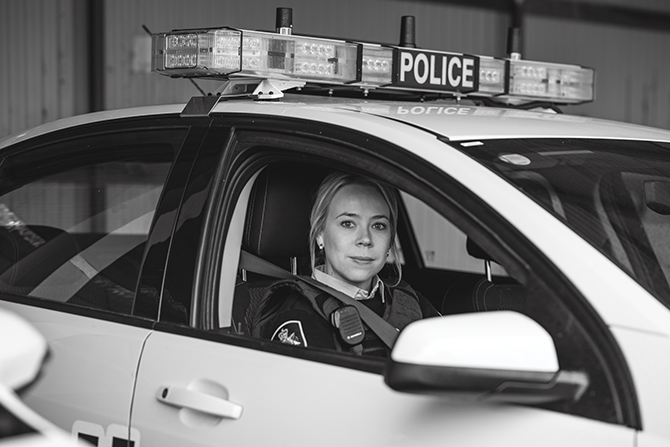
It’s a phrase that has never left Senior Constable Lauren Stone in her years working nightshift in the ACT police force.
In those long, eerie hours, the city streets seem to morph into something different entirely; where anyone with a hefty amount of alcohol or drugs in their system who isn’t already tucked up in bed is probably likely to get up to more harm than good.
In her shifts patrolling the city’s busiest nightspots to target alcohol-fuelled violence, Lauren often sees people in their darkest moments.
“The general rule of thumb is the later it gets, the worse the behaviour,” she says.
“It’s a time where people have had more alcohol, and as the clubs close, their entire patronage leave—which could be a couple of hundred people all at once. If there is a large group of people fuelled by alcohol at that time of the morning, there’s always going to be potential for trouble.”
One only has to think of the Sydney case of Thomas Kelly to know just how devastating the consequences of alcohol-fuelled violence can be.
While Canberra’s assault rates aren’t quite at the level of Sydney’s, the prevalence of alcohol-related problems remains a growing concern in the community. It’s sure to send a shiver up the spine of every parent but Lauren has seen it all; from “coward punches” resulting in head injuries to drug-related problems.
Of course, it takes a certain kind of resilience to be in this line of work: when she was just starting out at the age of 22, one of Lauren’s first jobs was to help revive a man who tried to gas himself in his car. The man survived, but it’s a scene that has stayed with her since.
“It was quite a confronting thing for anyone, especially a very junior police officer like I was at the time,” Lauren says.
“Dealing with people in crisis—or people who are having the worst day of their lives—isn’t easy, so you do have to be a certain personality type to really excel at it. You have to develop a lot of resilience in how you respond to the work that we do. But I think it’s still important to retain some level of humanity and empathy, rather than just switch your emotions off.
“So many women say ‘oh I could never do that job’ but really, I speak to so many other women in the industry and they just love it, because they discover qualities in themselves and a strength that they didn’t know they had.”

Fresh-faced with an easy nature, Lauren describes herself as “very single.” After all, it’s tricky to meet people when your working hours are 9 pm to 7 am.
“The [police team] become your family, it’s an incredible bond, and knowing everyone has your back is very reassuring,” she says.
When I ask how she gets through those longer nights, she responds with a smile: “Humour. You need a lot of dark humour and banter amongst the team to get through it sometimes.”
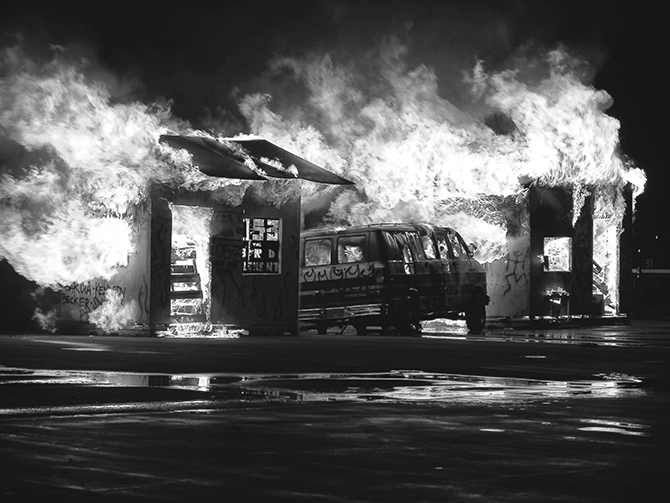
Having worked shift work as a firefighter for over a year, Felicity “Flip” Roantree has seen her fair share of confronting scenes.
Blazes, blood and broken bones rarely deter her now—she can keep a level head and steady hand.
The only thing that has taken her aback for a mere moment, was her first sighting of limbs “that had left the body.”
“It’s something that was very confronting, because it’s kind of like, ‘oh I didn’t realise it looked like that,’” Flip says.
“There are also the times when there’s a child involved in an incident who may have had their house burn down and lost everything —I have three kids of my own, so you always put yourself in that situation.”
A former schoolteacher, Flip discovered her calling at 42, when she decided to apply for the ACT Fire & Rescue team.
“I’d always been interested in helping people,” she says.
“I noticed they were recruiting and I just thought, ‘this is my chance’.”
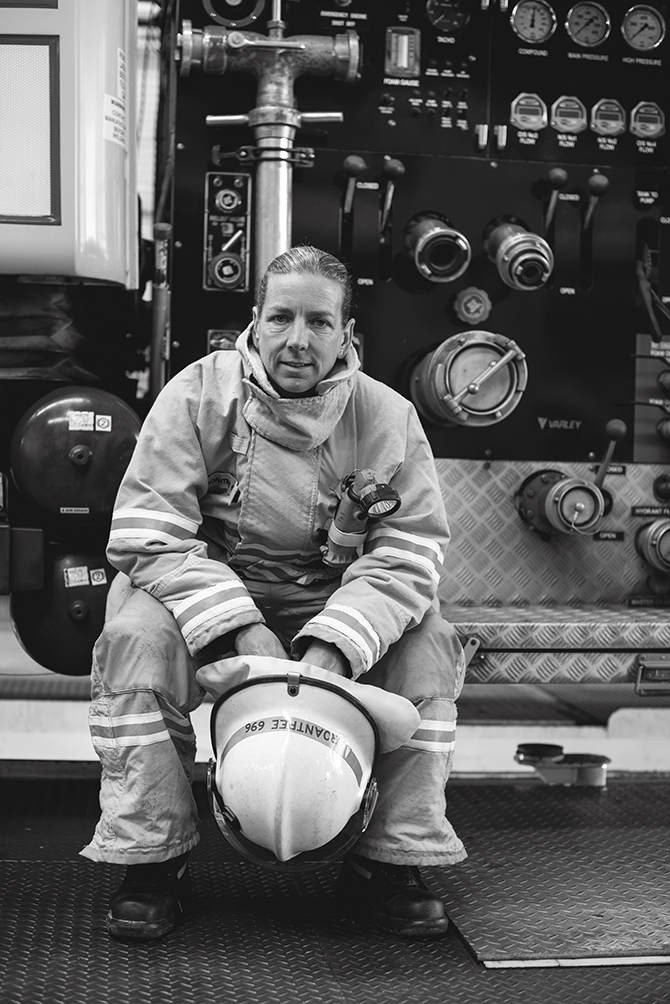
Working shiftwork has had its good and bad points—she’s had to get used to napping at odd hours, but it also means getting to spend more time with her three children during the day, or attending assemblies and school events that she wouldn’t usually have been able to.
After a year on the job, she says one thing that has never left her is that feeling of adrenaline—blood pumping, heart racing as the fire truck weaves through traffic, siren blaring.
“It’s a pretty significant adrenaline rush because, you don’t actually know ‘til you can see the fire, what’s it going to be like,” Flip says.
“Sometimes you can’t see it straight away because the fire is inside a structure so, you maybe have to go in and investigate and you don’t know what you’re in for. I can honestly say that no fire has ever been the same, so there are lots of different strategies and different techniques. I can’t tell you what my pulse rate is, but it’s pretty high when we arrive.”
The knowledge that each job is a potentially life-threatening situation demands a healthy dose of camaraderie.
“Sometimes you’ll go to a job, and you think it will be kind of run of the mill, but then you’re helping someone who has just lost everything,” Flip says.
“After those kind of jobs someone’s always checking up on you. They’ll say, ‘is everyone all right? Do you need some support?’ [Post traumatic stress disorder] is much more well-known than it used to be, so we have a good deal of support in place.”
It’s not all action, though—some nights are spent waiting around for a callout, chatting with the team, having a cup of tea or resting. One night there might be one call, the next night the team barely have a minute to sit down before they’re called to an emergency again.
As well as the physical side of it, Flip says there is “absolutely” a mental toughness to succeed in the job.
“You have to understand the things that happen on the job have already happened, and you didn’t actually cause them. You’re going in and do the very best you can in the situation,” she says.
When I ask if, in the height of a particularly stressful situation, she has ever wished she were back safe at her desk in her teaching job, she shakes her head with a slow smile.
“Oh, I don’t think I could ever go back to a desk job now—I’ve found my people.”
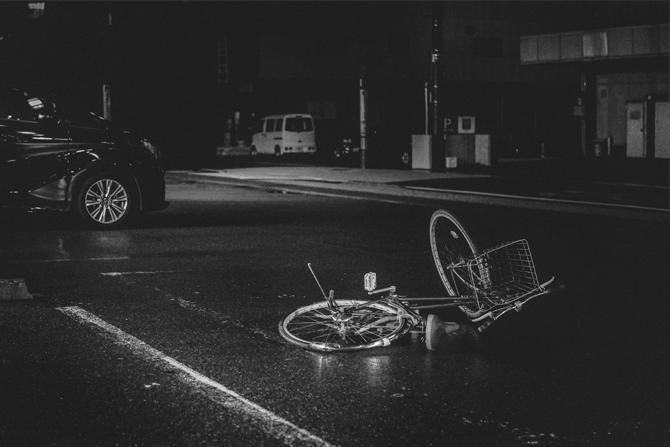
When a life hangs in the balance, every moment is critical.
Intensive care paramedics Lynda Hawkins and Hannah Brennan are precisely the kind of people you would want around in an emergency—matter-of-fact, level headed and no-nonsense.
The two have been working the nightshift in emergency services for over 18 years collectively, and are the first point of call for everything from traffic accidents and assaults, to mothers in labour who can’t quite make it to the hospital.
“A lot of time you might have 30 seconds or a minute, sometimes you’ve got five minutes,” Lynda says.
“You’re in that middle ground and you know you have to do something quickly, but you also don’t want to rush too much and miss anything. If it is a situation that is truly life and death, it’s damned if you do, damned if you don’t.
Often working the graveyard shift together, the two women have developed a close relationship that can be a source of comfort on those long nights.
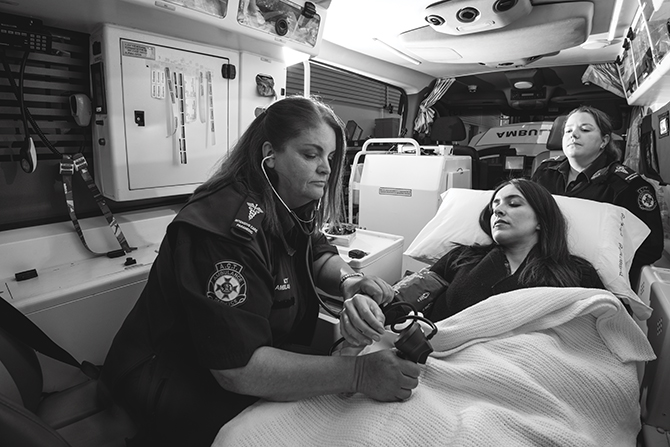
Both admit a desk job was always going to be out of the question for them.
“I’ve always been a bit nosy, I want to know what other people’s problems are and how I can fix them,” Lynda says.
“My husband works in an office job and sometimes when he complains about his day, I have to bite my tongue when I think back to all the things we’ve done that day.”
Adds Hannah: “This job is different every single day. You don’t know what you’re coming to, and I love that.”
While every shift is touch and go, both Lynda and Hannah admit they can always count on their busiest times to be Christmas Day, any day with rainy weather and the Sunday after a long weekend.
“It’s when a lot of people are coming back from the coast, they’ve had a long drive back on the road and just want to get home,” Hannah says.
“People assume nightshift is quiet but really, if it’s 3 am that’s the time when if there’s something wrong and they call, it’s going to be serious.”
A low point of the job, of course, is having to make quick decisions that may not always result in a happy ending.
“I think we still struggle every day and I know for me I question every job that I do,” Hannah says.
“I go back and I think and reflect on it and you go, ‘maybe I could’ve done that differently and then next time I’ll learn from that.’ I think that’s just the nature of what we do as well. We’re constantly reviewing what we’ve done and said, and how we’ve treated patients and we take that to our next job and hopefully we do the next one just a bit better.”
Lynda nods firmly.
“One of the things I was told early on, and I’ve repeated so many times, is the day you stop learning something is the day you need to consider leaving the job.”
PHOTOGRAPHY Martin Ollman

Leave a Reply
You must be logged in to post a comment.