Troll Hunting: Ginger Gorman exposes the internet’s evil underside
Posted on
Ginger Gorman’s first book and painstaking investigation into online trolling is being launched on Friday.
We get the scoop on what motivated her to write it and how deeply it affected her as she reveals new research suggesting almost 9 million Australians have experienced online harassment.
Why write this book?
The road to write Troll Hunting was a long and strange one. I’d never really thought much about online safety until my family and I became the targets of an orchestrated online hate campaign in 2013. This occurred as a result of something I’d written and broadcast on the ABC.
As part of that deluge of hatred, we got a death threat and found a photo of our family on a fascist hate website. The terror was indescribable. My husband and I were genuinely scared something would happen to our children.
Once I stopped being afraid – some 18 months later – I went out to meet and interview serious and committed trolls and write about what I found. Honestly, I had no idea what I was walking into; I was so naïve.
That journalistic work eventually led into me undertaking a massive investigation for Fairfax newspapers across the country and in New Zealand in the middle of 2017. My front-page story about ‘Mark,’ the predator troll, really went viral. People seemed to be shocked by how creepy and dangerous he is – and the real-life harm he inflicts.
After that, two publishers wrote to me asking if I’d like to write a book. Initially I wanted to say “no,” because it was essentially exposing my family to great harm again.
But so many predator trolling victims – who had had their lives completely destroyed – had written to me over the past few years in sheer desperation. All of them said: I can’t get help.
So really in the end I felt like there was no other choice but to write the book.
When did you first notice that the work was impacting your mental health?
Writing Troll Hunting nearly cracked me in half. Because I’d been talking to trolls for a few years prior to starting the book, I thought I knew what I was getting into. But I really didn’t.
On top of reliving my own trauma of being severely trolled, the book looks at all kinds of real-life horrors that are directly linked to predator trolling: shootings, suicide and suicide attempts, terrorism, a woman killed and many others injured at a Unite the Right rally in the US, indecent communication with a child, stalking, domestic violence, PTSD, mental illness, hatred and anger, limitless misogyny and racism, anti-Semitism. One of the things I can’t get out of my mind is journalist Sherele Moody’s dead horse and poisoned dog.
Honestly, the misery was relentless. And after a while, it severely affected my mental health. Towards the end of writing the book, I was just drinking all the time and crying constantly and shouting at my children. It wasn’t pretty.
I am now undertaking a course of specialised therapy for trauma in journalism in order to deal with the aftermath – and be prepared to speak in public about the book.
Any moments of relief?
There was a moment when one of the trolls, who I’d developed quite a deep and trusting relationship with, declared he no longer hated women. He thanked me for changing his mind. It was a massive moment for me because he had a terrible upbringing full of violence and neglect – and it was clear to me how he’d become so angry and why he hated women and why he wanted to lash out at strangers.
While writing the book, I often felt so hopeless about the constant and extreme hatred and misogyny and violence expressed by these young men. But this watershed moment just shows that hatred and misogyny like this can’t survive prolonged exposure to kindness. We need to bring our greatest humanity and compassion to this problem. (He wouldn’t let me write about this moment in the book – so it’s actually not in there!).
How many trolls did you engage with?
There were probably half a dozen trolls I developed deep and enduring relationships with and I talked to them constantly while writing Troll Hunting. Some of those relationships go back to 2014. The weird thing about trolls is that they are always online – so your interview never actually ends!
But there were scores more trolls I encountered in one way or another. Some of these interactions may have been fleeting or brief. Others more long term.
In other cases, some of the trolls were dead (they are damaged individuals, so this isn’t uncommon). In those cases, perhaps I spoke to troll friends or acquaintances or journalists about them. And I read their vile chatlogs and dug up screenshots and read about their previous exploits. If you know where to look, a lot of online shenanigans and hatred is archived. My contacts in the trolling world would often give me specific information like this if I asked for it. They were a wealth of information about trolling lore and language, which is incredibly complex to an outsider like me.
I also read hundreds and hundreds of academic papers and news articles. I did more than 40 interviews for the book and did endless fact-checking. Although it’s incredibly readable investigative journalism, unpinning that was a huge pile of research.
How have the trolls received the book?
For the most part, the trolls featured in the book are actually quite excited about its release. You have to remember that they feel marginalised – rightly or wrongly – and that no one is listening to them. I spent such a long time developing relationships with a handful of them and hearing those young men, we built up trust relationships.
Because some of them are genuinely terrifying and I know they can really harm me if they want to – and for reasons outlined in the book – I don’t trust law enforcement to protect me, I had a ‘no sudden movements’ policy.
This is very unusual in journalism, but I generally showed the predator trolls the parts of the book about them before publication. This wasn’t to give them editorial control – it was so there was no surprises at their end. Culturally, trolls don’t seem to care what’s said about them, but this reinforced our trust and I’m hoping this mitigates the danger a bit.
Who will read Troll Hunting and how important is it in the modern age of social media?
People act as if the internet is optional. But actually, even the United Nations has recognised internet access – and the preservation of it – as a human right that’s crucial to free expression and the sharing of information. This means my book is for anyone who is online. Also, that might make it sound very worthy. But in fact, it reads like a thriller because of all the true crime in there!
What else did you find out?
Off the back of my own research, I commissioned original polling from the Australia Institute.
TAI’s nationally representative survey of 1557 people undertaken in 2018 for the purposes of this book found 44 per cent of women and 39 per cent of men have experienced one or more forms of online harassment. This is equivalent to 8.8 million Australians experiencing harassment online.
Taking into account two types of expenses – medical costs and lost income – TAI’s high estimate is that Australians who are at the receiving end of cyber hate and online harassment have borne an aggregate cost of $3.7 billion.
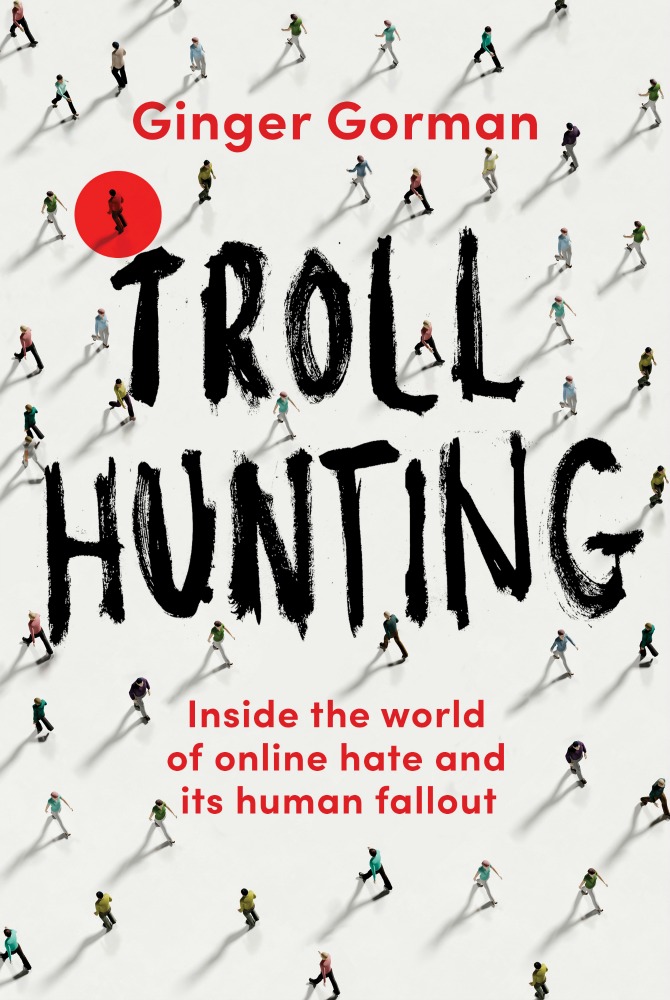
Troll Hunting is out on Friday 1 February and will be available from a range of bookshops. Find your nearest stockist here.
The book will be launched at the National Library on February 12. Tickets here.
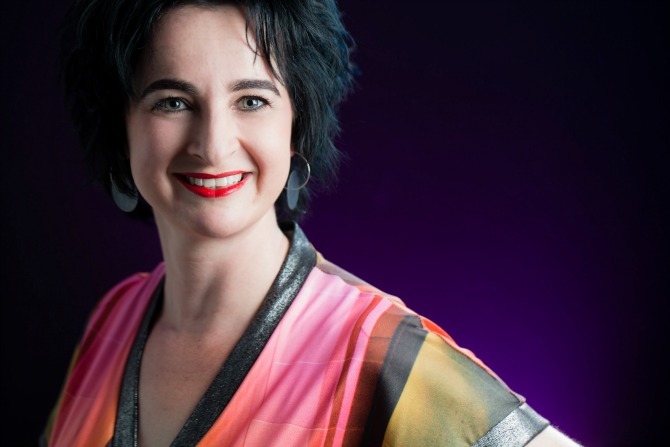
Photo of Ginger Gorman by Hilary Wardhaugh.
Leave a Reply