Fitness Roadtest: Capital Clinic Physiotherapy Running Rehabilitation

Posted on
Running is one of those funny things that tends to polarise people: you either love it or hate it.
I belong to the first camp: I love running. When I was training for my marathon, it was like I couldn’t get enough – that is, until I got injured. Turns out, sitting at a desk all day for work (I was in the public service at the time) and being a ‘weekend warrior’ can be tough business…
That’s where Capital Clinic Physiotherapy come in. Us weekend warriors are kind of their thing: they often work with corporate workers to carry out workplace assessments, pilates and exercise classes to address common issues associated with sedentary work, pre-employment screenings, workplace education – basically, they help keep workplaces healthy, and we love that.
What really piqued my interest was their running rehabilitation classes. These classes are targeted towards runners to help them with common issues and improve their overall running performance. It’s educational but also physical, designed to focus on core areas that are important for running like back, hip and knee stability, and strength and flexibility. Perhaps best of all, it’s run by Masters qualified Exercise Physiologist, two-time Ironman and all-round nice guy Dave Halpin – so you’re getting assistance from someone who knows what they’re talking about from a clinical perspective, but also who’s been there and faced challenges as a runner himself.
Before I started classes, I had a running assessment.
Most people who start the running rehabilitation program undergo an assessment – but not all of them, as many clients progress through to the classes as a kind of post-rehab, so they’ve been seeing Dave or another one of the Capital Clinic physiotherapists for a while. Assessments also aren’t always necessary for people whose issue is most likely not technique related, but it’s a good idea to check in and see if you might need one.

Hand over heart, this assessment was the best thing I’ve ever done for my running. You see, I’d had injuries in the past that were related to my running technique, or a lack of strength/stability. I had bursitis in both my hips as a result of overpronation (where your foot rolls in after in lands on the ground) and a knee injury from overstriding.
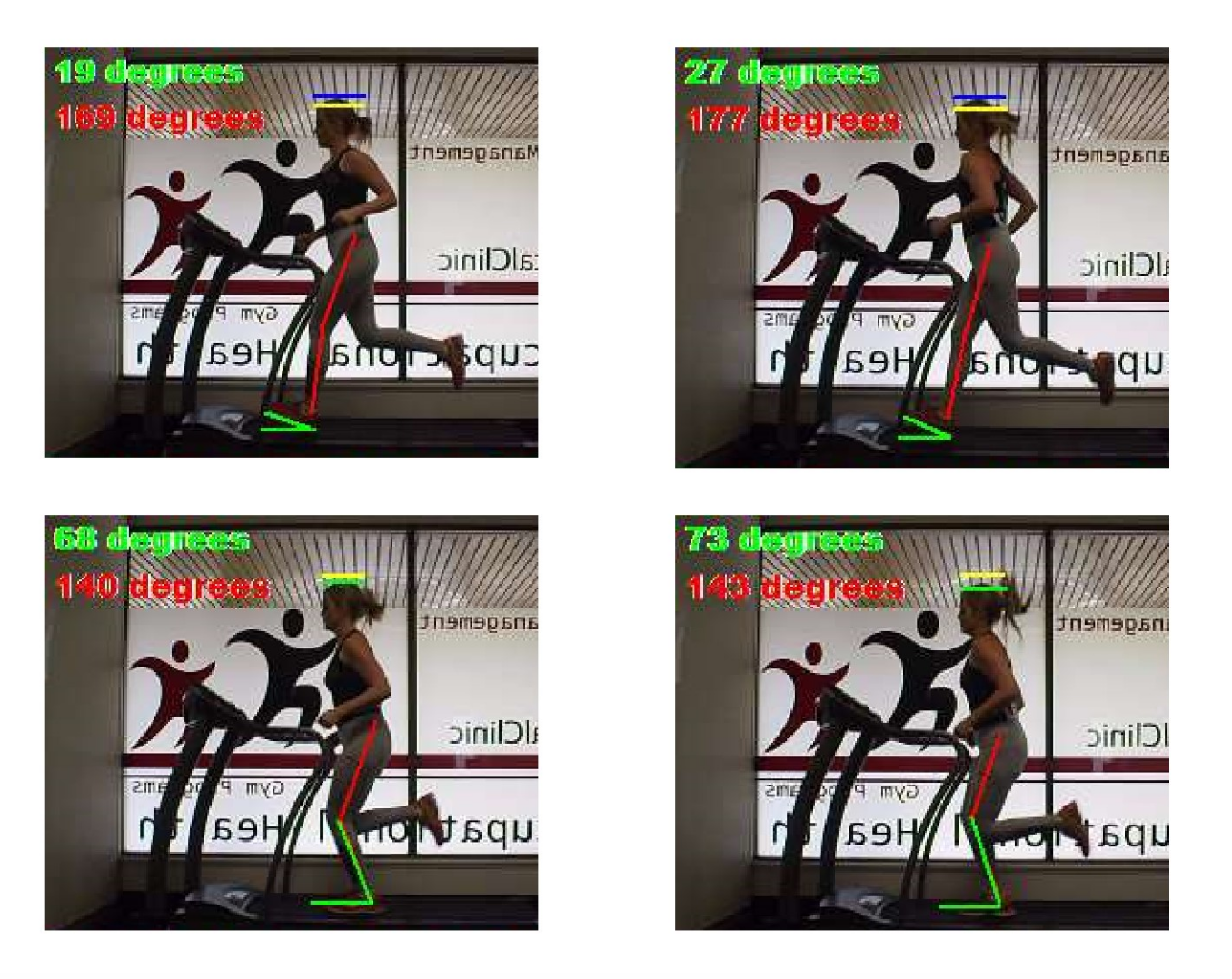
We started the assessment by talking about my training history and injuries, all while Dave stuck little stickers to my clothing and body. Then he took me to a treadmill, where he filmed me running from different angles for 10-15 minutes. At first I felt a bit anxious and unnatural, intensely aware that I was being filmed, but after a few minutes I settled into my natural stride and (almost) forgot about the cameras.
Dave then replayed some of the footage, drawing lines over my body where the stickers were to show where I was out of balance or using poor technique. He also measured my cadence, force, the flexion of knees and ankles and my pelvic drop. He gave me some initial advice like increasing my steps and keeping my hips neutral, and soon after my appointment I received a full report, with statistics, pictures, cues to focus on and long term goals for my technique.
This was really valuable for me personally, as this kind of information tends to go in one ear and out the other during appointments, or forgotten during training. Having the information readily accessible so that I could go back and read it is really handy.
About a week after my assessment, I started classes. One of the first things I noticed was the big focus on education – Dave doesn’t just tell you why what you’re doing is important – he shows you with models that show how different muscles are used and connect. Having this awareness of your body is super helpful not only during the session so you’re aware of the purpose of the exercises, but also to know when you’re running so you can correct your technique or focus on using particular muscles.
The physical part of the class is really quite broad. One of the things I found most beneficial is that Dave teaches you how to foam roll.
Turns out, it’s not just rolling your body up and down! When I think of how much time I’ve wasted rolling the wrong way, it’s pretty frustrating. We’re often told how important foam rolling is, so it’s good to know how to do it the right way. Each class we did foam rolling, lots of balancing to improve stability, strength work and stretching. The strength work isn’t really heavy weights – it’s more about performing movements correctly so that you’re strengthening muscles. There’s a range of equipment in the clinic and we used everything from cable machines to bands, balls, trampolines, benches, dumbbells – event a pilates reformer.
What I really appreciated is that the classes complimented my own training program, so I could continue what I was doing in the gym or running. That being said, one of the really helpful things that Dave does with his clients is assist with programming. Plus, as part of the running rehabilitation classes you get a personalised, take-home program with exercises to keep you going until the next weekly class.
The classes are run at 6:30pm on Monday evenings are run in 8-week blocks. Participants are friendly, with all different backgrounds, abilities and goals so no matter where you’re at you’ll fit right in.
I wish I’d known about this class when I was training for my marathon, because I honestly believe it would have helped to prevent the injuries I suffered. Getting injured is always tough, and this class is a great option if you’ve been injured and are looking to get back into running and correct your form, or if you’re looking to prevent an injury (word to the wise: the latter option is definitely preferable to the former!). While on this occasion I was a guest of Capital Clinic Physiotherapy, if I was looking to get back into running, particularly for an event like a half marathon or marathon, I wouldn’t hesitate at signing up for this class again.
the essentials
What: Capital Clinic Physiotherapy Running Rehabilitation Classes
Where: Suite 5, Level 3 CCG House, 219 London Circuit, Canberra City
When: 6:30pm Mondays
Contact: Visit www.capitalclinicphysio.com.au or call 6257 8900
The author roadtested Capital Clinic Physiotherapy Running Rehabilitation’s program free of charge for review purposes however her opinions remain her own.


Leave a Reply